
The Complete Glossary of Paid Digital Advertising Terms
Diving into the ins and outs of paid digital advertising can be a daunting challenge. From acronyms to technical metrics, there is a lot to keep track of, especially if you manage multiple campaigns for multiple clients across major platforms like Google and Meta. It helps immensely to have a clear reference. This glossary aims to simplify some of the most common terminology for marketers, business owners, and anyone looking to understand paid digital advertising.
Whether you’re seeking answers to frequently asked questions such as “what is PPC advertising”, “what is ROAS”, or the quality score definition, this guide covers the essential terms and concepts you need to know to manage your campaigns effectively.
A/B Testing

Also known as split testing, A/B testing is a method of comparing two variations of an ad or landing page to determine which one performs better. The process involves trying out different headlines, images, or calls to action (CTAs) so that marketers can make data-driven decisions to improve engagement, click-through rates (CTR), and conversions.
Ad Copy
Ad copy refers to the text, messaging, or CTA in an advertisement. Well-crafted ad copy can improve CTR and conversion rates, making it an important paid search term to understand.
For guidance on how to write better ad copy, you can read our article “Powerful Tips to Write Effective Ad Copy” for some useful hints.
Ad Extension
Ad extensions involve additional elements that can be attached to an ad to provide more information or prompt specific actions. Common examples include sitelinks, call buttons, location details, store ratings, and product information. These extensions help ads stand out while giving users clearer reasons to engage.
In Google Ads, ad extensions allow advertisers to enhance their listings with extra details such as phone numbers, pricing, promotions, or supporting text. When used well, they can improve visibility, CTR, and overall ad relevance without increasing cost per click (CPC).
Ad Rank
Ad rank determines where your ad appears on the search engine results page (SERP). In simple terms, it influences how prominently your ad is shown to users. Platforms like Google Ads calculate Ad Rank using your bid amount and quality score, among other metrics that affect overall relevance and user experience.
Ad Scheduling/Dayparting
Ad scheduling, also called dayparting, is a feature that allows advertisers to control the specific days and times their ads appear. This helps campaigns reach target audiences during high-intent periods, improving performance while optimizing budget use in the process.
Auction Insights
Auction insights provide comparative performance data (specifically in Google Ads), showing how your ads stack up against competitors in the same auctions. Key metrics include impression share, overlap rate, position above rate, and outranking share. These insights help marketers fine-tune bids, targeting, and ad creative to stay competitive and improve overall results.
Bid Strategy/Bidding Strategies
A bid refers to the amount an advertiser is willing to pay for a click or a conversion. Bidding strategies then define how those bids are set to support specific campaign goals, such as maximizing clicks, driving conversions, or achieving a target return on ad spend (ROAS). Common approaches include manual CPC, enhanced CPC, target cost per acquisition (CPA), and target ROAS.
Campaign Type
Campaign types determine where and how ads are served. Common types include search, display, shopping, video, and app campaigns, each calling for unique targeting options and ad formats.
Click-Through Rate (CTR)
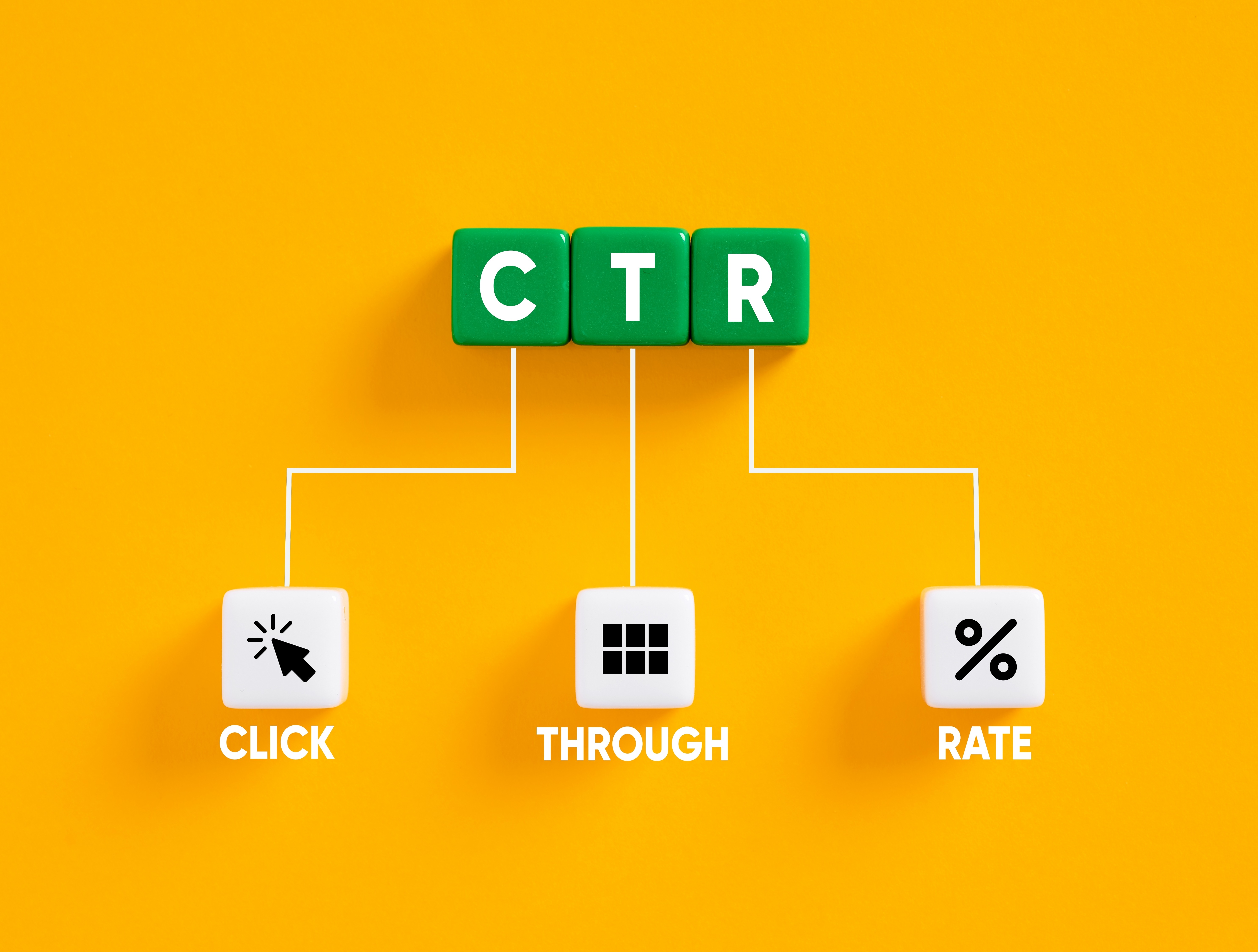
CTR measures the percentage of users who click on an ad after seeing it. A higher CTR typically indicates that your ad copy, targeting, and intent alignment resonate with your audience. CTR benchmarks vary widely depending on the platform, industry, and campaign type. For search campaigns, rates often fall between 5% and 10% (depending on the industry), while branded or highly targeted campaigns can exceed that range.
The formula for CTR is as follows:
CTR = Clicks / Impressions
Conversion
A conversion happens when a user completes the intended goal of a web page. This could be downloading a file, submitting a form, making a purchase, getting in touch, or subscribing to a newsletter.
By extension, conversion rate is the percentage of visitors who complete that action. Conversion tracking lets advertisers measure these actions by defining traceable events on websites or within apps. This helps assess user engagement and the impact of campaigns designed to drive specific outcomes.
Cost Per Acquisition (CPA)
CPA, or cost per action, measures how much it costs to acquire a customer or lead from a campaign. It is a key metric for evaluating campaign profitability, return on investment (ROI), and the effectiveness of your bid strategies.
Cost Per Click (CPC)
CPC is the amount a business pays each time someone clicks on its ad. The actual CPC depends on factors like your maximum bid, ad rank, and quality score. Unlike CPM (cost per mille or cost per thousand), which charges per thousand impressions, CPC focuses on real engagement through clicks, making it a key metric for campaigns designed to drive traffic and conversions. Understanding CPM vs CPC helps advertisers choose the most cost-effective strategy for their campaign objectives.
Cost Per Engagement (CPE)
CPE tracks the cost of specific user interactions (engagement) such as likes, shares, or comments. Advertisers are charged when a user completes an engagement action defined by the platform. This metric is particularly useful for social and display campaigns, where interaction and audience response are the primary objectives.
Display Advertising
Display advertising involves placing visual ads across web pages, mobile apps, and social platforms. Common formats include image ads, banners, videos, and richer executions like animations or slideshows. Display ads are commonly used to build brand awareness and work alongside search campaigns, where users are actively looking for specific products or solutions.
Google Ads
Google Ads refers to paid advertisements served across Google’s ecosystem, including search results, websites on the Display Network, shopping listings, and video platforms like YouTube. These ads are funded by businesses and designed to reach users based on intent, interests, or behavior. Learning about what Google Ads is helps marketers plan, run, and measure campaigns more effectively.
The platform supports a wide range of campaign types, bidding strategies, and targeting options, allowing advertisers to align their ads with specific business goals.
Impressions
Impressions are used to track the number of times an ad is shown to a visitor on a website, app, or social media platform, regardless of whether the user clicks on it.
In the same vein, impression share represents the percentage of total available impressions your ads captured within a given market or auction. Impression share lost reflects missed visibility, most often caused by limited budget or lower ad rank.
Keywords
Keywords are specific words and phrases people use when searching for a business, product, or service. In paid advertising, these keywords trigger your ads to appear when they match a user’s search query. Keywords can be broad, related, phrase-based, semantic, exact match, or negative. These are collectively referred to as keyword match types.
Keyword intent describes the purpose behind a user’s search. Understanding this intent helps marketers prioritize searches that are more likely to lead to meaningful actions, such as purchases, sign-ups, or enquiries.
This is also why it’s important to know how to choose the best keywords for your digital campaigns.
Landing Page
Landing pages are the pages that users arrive on or “land” on after clicking an ad, email, or link on the SERP. Optimized landing pages can increase conversion rates and boost overall campaign performance.
Meta Ads
Meta Ads refers to paid advertising on Meta platforms like Facebook, Instagram, and Threads. They allow precise targeting based on demographics, interests, user behaviors, and more, making them essential for regional campaigns in Asia. Ads are created, managed, and optimized through Meta Ads Manager, providing marketers with control over campaign performance across these platforms.
Negative Keyword
In the context of paid ads, negative keywords are used to stop ads from appearing for specific search queries. Knowing what a negative keyword is and how to use it helps improve ad relevance and reduce wasted spend.
For example, if a business sells premium leather bags, it may add “cheap” as a negative keyword. This prevents ads from showing to users searching for low-cost alternatives that are unlikely to convert.
Paid Search
Paid search refers to running sponsored ads on search engines through an auction-based advertising model. Each paid search term is a keyword or phrase that triggers an ad when users enter relevant queries. Paid search campaigns focus on reaching users who are actively searching for specific products or services, making them a core channel for performance-driven advertising.
Pay-Per-Click (PPC) Advertising

What is PPC advertising? It is a term describing a paid advertising model where advertisers bid to display ads on platforms like search engines and only pay when a user clicks on their ad. PPC ads commonly appear on SERPs, as well as across partner sites and ad networks, making it a core component of many digital marketing strategies.
As one of the foundational terms in the digital marketing glossary, understanding how PPC advertising works is essential for managing paid campaigns effectively.
Quality Score
Quality Score is a metric in Google Ads that evaluates how relevant your ads, keywords, and landing pages are to users. A higher Quality Score can boost your ad’s position while reducing your CPC, helping campaigns perform more efficiently.
You can learn more in our guide “Google Quality Score — Everything About the Formula”.
Remarketing/Retargeting
Remarketing/retargeting is a strategy that targets users who have previously engaged with your website, mobile app, or ads. These campaigns, often referred to interchangeably as remarketing or retargeting, help increase conversions by reminding potential customers of products or services they have shown interest in.
Return on Ad Spend (ROAS)
ROAS is a metric used to measure revenue generated for every dollar spent on advertising. Understanding what is ROAS helps marketers evaluate profitability and compare it against broader investment outcomes (often framed as ROAS vs ROI). With ROAS targeting, campaigns can focus on driving revenue rather than just clicks or impressions.
Search Engine Marketing (SEM)
SEM encompasses all paid search activities, including campaign planning, keyword targeting, ad copy creation, and performance analysis on platforms like Google Ads. Unlike Search Engine Optimization (SEO), which focuses on organic visibility, SEM is strictly about paid tactics designed to promote ads and increase their visibility on the SERP.
Search Network
The Search Network consists of sites where ads appear alongside search results on search engines. This allows advertisers to connect with users actively searching for specific products or services. In comparison, the Display Network delivers ads across websites, apps, and other digital placements, focusing more on brand awareness rather than direct search intent.
Key Takeaway: Mastering Paid Advertising Terms
Paid digital advertising has its own language. From understanding what is CPC or CPM, to measuring ROAS and conversions, mastering these terms equips marketers to optimize campaigns and make better decisions. Whether you’re managing Google Ads, Meta Ads, or any other platform, this glossary serves as a reliable reference for key concepts and strategies.
Ready to elevate your campaigns? Explore OptAdEasy’s platform to streamline ad management and maximize your paid digital advertising results across Asia. Sign up for a free trial today!