
From Awareness to Action: Google's Video, Display & Search Ads Synergy
The customer journey doesn’t follow a linear path anymore. One moment, they’re watching a product review; the next, they’re scrolling a news site; and later still, they’re typing a high-intent search query. Each of these touchpoints leaves a trace, but rarely do they tell the full story in isolation.
This fragmentation exposes a critical flaw in many campaigns today: siloed execution. While a lot of brands run a full suite of YouTube ads, display advertising, and Google Search ads, they often measure them as independent efforts. This leads to partial visibility and lots of missed opportunities.
To fill this gap, advertisers must shift from a multi-channel mindset to a unified ecosystem. Single-channel strategies struggle because they only capture one slice of user intent. They either generate awareness without conversion or chase conversions without building demand. In other words, you’ll need a full funnel advertising strategy to succeed in marketing!
Done right, it connects these scattered touchpoints into a cohesive system, transforming fleeting impressions into a structured journey from discovery to decision.
What Is Full Funnel Advertising (And Why It Matters)
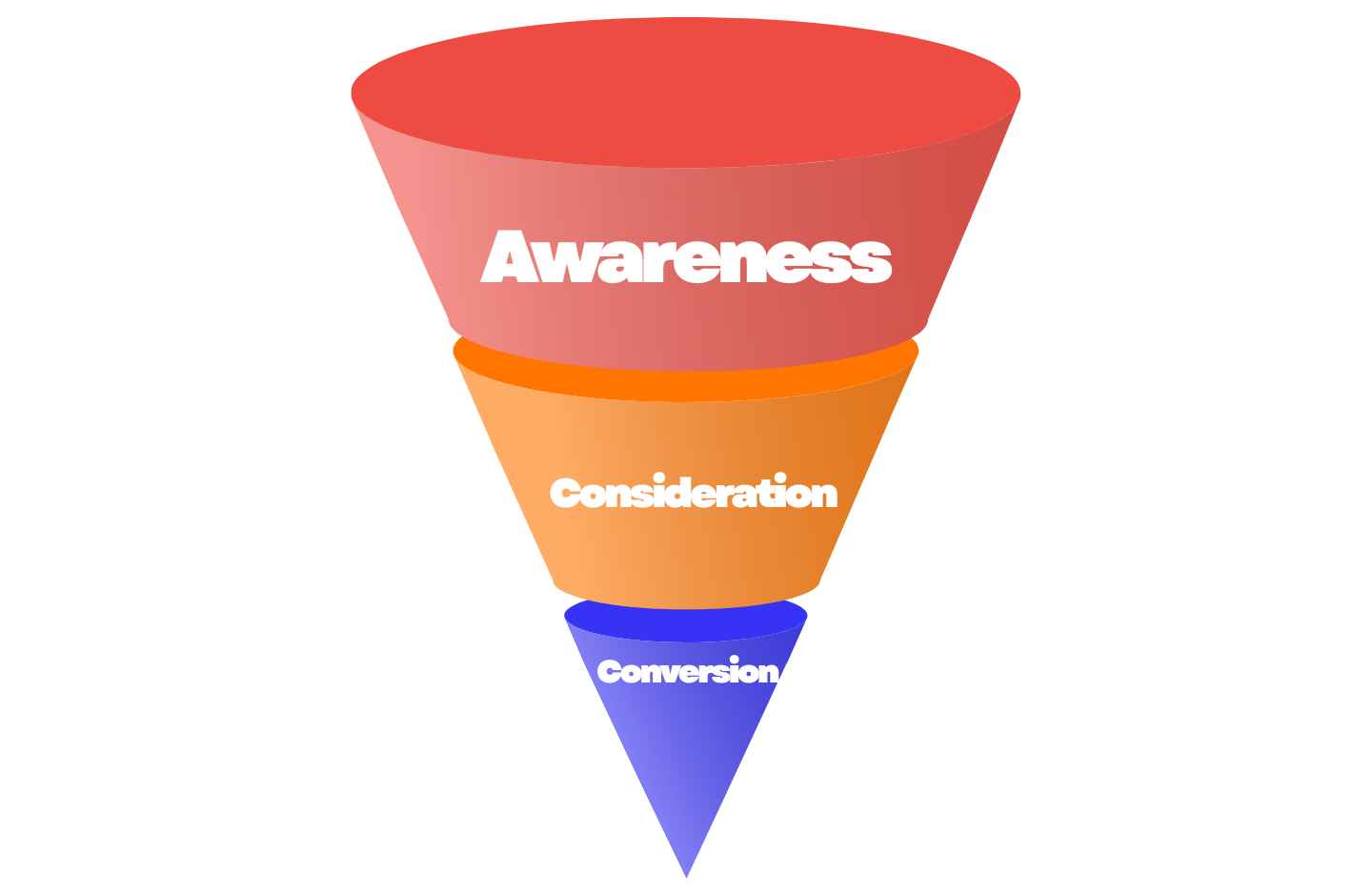
At its core, full funnel advertising is a strategy that aligns marketing efforts across every stage of the customer journey, from that first "What is this?" moment to the final "Buy now" click.
Here’s how the funnel breaks down:
- Awareness: Introducing your brand to new audiences who may not yet be actively searching.
- Consideration: Engaging users who have shown interest and are evaluating options.
- Conversion: Capturing high-intent users ready to take action.
A strong funnel strategy ensures that each stage supports the next. Awareness builds familiarity, consideration strengthens intent, and conversion closes the loop.
It may sound simple, but make no mistake about it, the full-funnel approach is highly impactful. According to a Nielsen meta-analysis commissioned by Google, brands that traditionally focused only on upper-funnel tactics experience 20% more incremental sales when they also invest in mid- or lower-funnel tactics with Google Ads.
Indeed, winning in the marketing world today isn't about picking one channel. It’s about making them work as a single unit. That’s the true essence of a full-funnel strategy.
Understanding Google’s Core Ad Channels
To build a unified system, you have to understand the specific job or role each channel needs to perform. While they all live under the same Google Ads umbrella, each has a unique way of finding and influencing your next customer.
Google Ads Channels at a Glance: Roles Across the Funnel
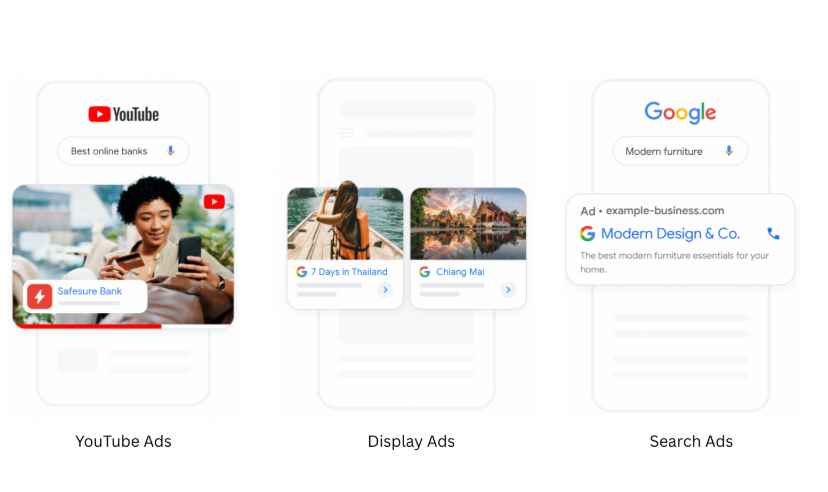
| Channel | Primary Role | Key Strengths | Best Use Case | Funnel Stage | |||||
| YouTube Ads | Demand generation | High reach, visual storytelling, strong engagement | Launching campaigns, building awareness | Awareness | |||||
| Display Ads | Demand nurturing | Retargeting, audience targeting, cost-efficient impressions | Staying top-of-mind, reinforcing messaging | Consideration | |||||
| Search Ads | Demand capture | High intent, keyword targeting, conversion-focused | Capturing ready-to-buy users | Conversion |
Table 1: Primary roles and key strengths of Google’s core advertising channels by funnel stage.
Individually, these channels are effective. Together, they reflect how people actually browse, research, and buy. Display advertising (or specifically Google Display Ads) bridges the gap by keeping brands visible in those quiet moments between initial discovery on YouTube and the final intent-driven search.
If you’re looking to put this into practice, we’ve created a guide that walks you through the basics of setting up Google Ads campaigns.
How These Channels Work Together
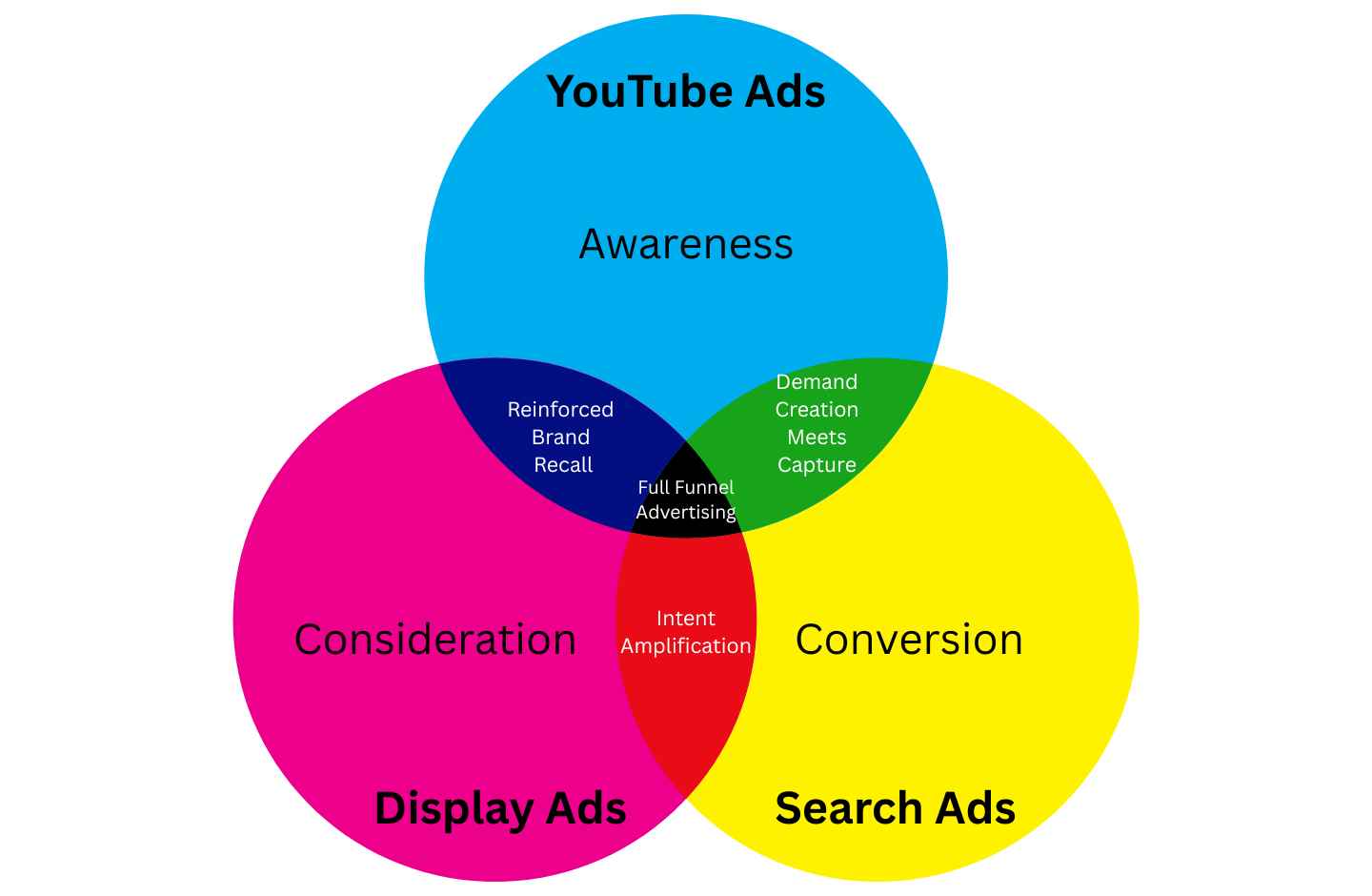
The real value of this ecosystem lies in the intersections. When these channels overlap, they create a series of strategic hand-offs: YouTube and Display work together to reinforce brand recall through storytelling and visibility, while Display and Search bridge the gap between passive interest and active intent. Finally, the pairing of YouTube and Search ensures that the demand created by video is captured immediately when a user takes action.
Operating at the heart of these overlaps transforms individual placements into a frictionless path. This approach allows brands to guide a user from the first impression toward a final decision.
From Discovery to Decision: A Unified Customer Journey
Picture this flow. A user encounters your brand through a YouTube ad, drawn in by a compelling video. Later, they browse a news site and see a Display ad that reinforces the message. A few days pass, and they search for a related product. Your Search ad appears at the exact moment they are ready to buy.
That final click isn't accidental. It’s a result of accumulated exposure throughout the customer’s highly intentional journey. Each interaction builds familiarity and trust, layer upon layer. Removing one stage weakens the entire system, while keeping them connected allows the impact to compound.
Moving Beyond the "Search vs. Display" Debate
Debates like Search Ads vs. Display Ads or Video Ads vs. Display Ads miss the bigger picture. These formats don’t compete with one another. They serve different roles within a shared journey. Video creates demand, Display sustains interest, and Search captures demand.
The takeaway here is simple. Full-funnel advertising works because it mirrors real user behavior rather than favoring a single channel. And for marketers and agencies managing complex campaigns across Asia, the goal is better coordination.
Turning Full Funnel Advertising Strategy into Results
Running these campaigns introduces challenges like fragmented data and disconnected messaging. Success necessitates more than just launching ads. It also requires visibility across the entire funnel. Organizations that leverage integrated data can improve their marketing ROI, and this advantage comes from better decision-making.
This is where the right infrastructure becomes a competitive edge. Platforms like OptAdEasy bridge the gap by consolidating data across Google Ads and Meta Ads, offering the clear insights and “competitor stalking” needed to manage complex campaigns. Because when you can track performance across channels in one place, full-funnel execution stops being a theory and becomes a repeatable advantage.
For marketers and agencies across Asia, the path forward is clear. Better coordination, powered by unified data, turns the "messy middle" into a predictable engine for growth.
Don't let fragmented data slow your growth. Use OptAdEasy to see your data in one place and turn your full-funnel strategy into a repeatable advantage. Sign up for a free trial today.